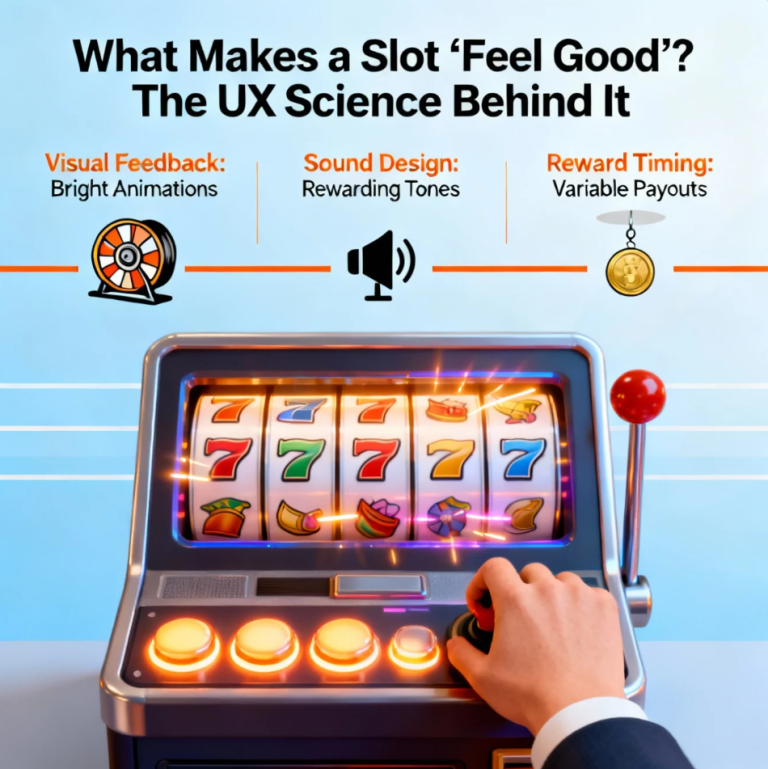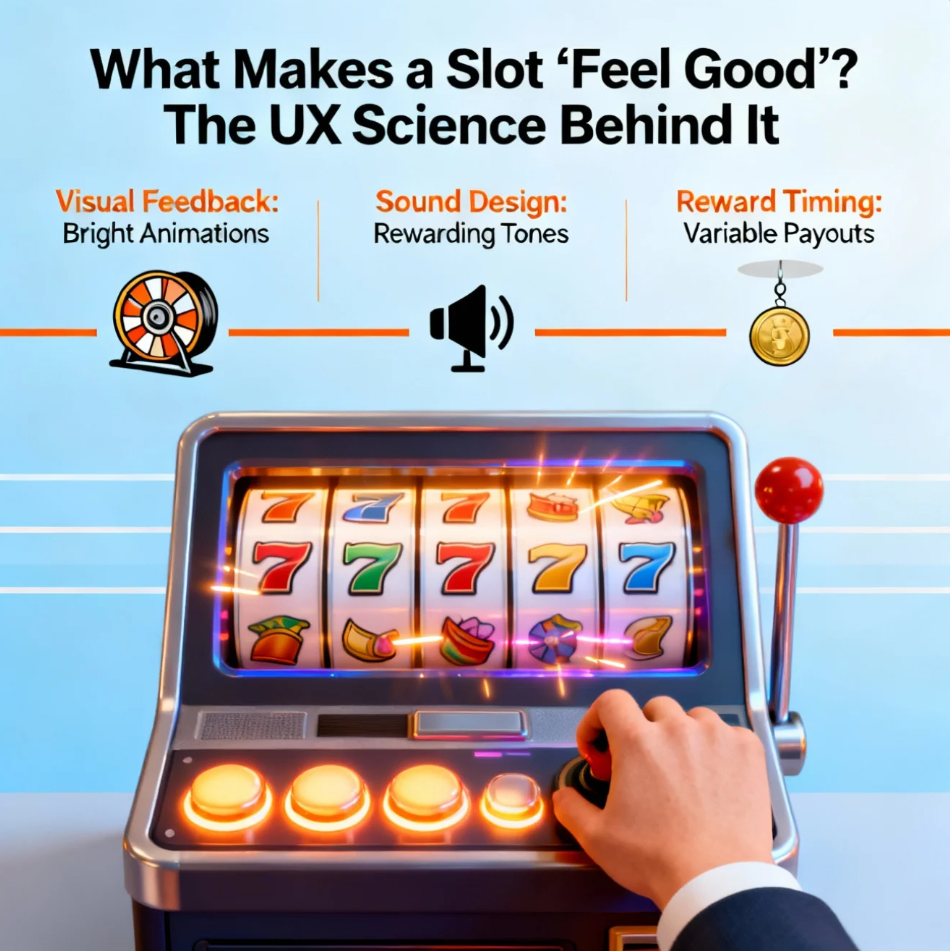
Slot games may look simple on the surface—spin, wait, win or lose—but behind every “good-feeling” slot is a carefully engineered UX design system. From sound cues to reward pacing, modern slot UX design blends psychology, neuroscience, and interaction design to create an experience that feels smooth, exciting, and emotionally rewarding.
So what exactly makes a slot feel good? Let’s break down the UX science behind it.
🎯 1. Immediate Feedback and Responsiveness
One of the strongest contributors to positive slot UX design is instant feedback.
When a player taps “spin,” several things happen almost immediately:
- Reels animate without delay
- Sound effects confirm the action
- Visual motion signals progress
This responsiveness reduces cognitive friction and reinforces a sense of control. In UX psychology, this is known as action–reaction confirmation, a core principle of satisfying interaction design.
A delay of even 300–500 milliseconds can noticeably reduce perceived quality.
🎵 2. Sound Design That Rewards the Brain
Sound is not decorative—it’s functional.
Winning sounds are often:
- Higher-pitched
- Harmonically rich
- Slightly delayed after visual confirmation
This timing triggers a dopamine response, similar to how achievement sounds work in video games. Even small wins use positive audio cues, which keeps emotional engagement high.
According to UX research from the Nielsen Norman Group, sound that aligns with user intent significantly boosts perceived usability and enjoyment.
🔗 Outbound link: https://www.nngroup.com/articles/audio-ux/
🎨 3. Visual Hierarchy and Motion Psychology
Good slot UX design uses motion with intention, not chaos.
Key visual principles include:
- Clear focal points (reels > win lines > balance)
- Smooth easing animations (not linear or abrupt)
- Controlled visual noise
Micro-animations—like coin bursts or glowing paylines—guide the eye and reduce mental effort. This creates what UX designers call cognitive fluency, where the brain processes information effortlessly.
Slots that feel “messy” often fail here.
🧠 4. Reward Timing and Variable Reinforcement
At the core of every slot experience is variable reward scheduling—a concept rooted in behavioral psychology.
Instead of predictable rewards:
- Wins vary in size
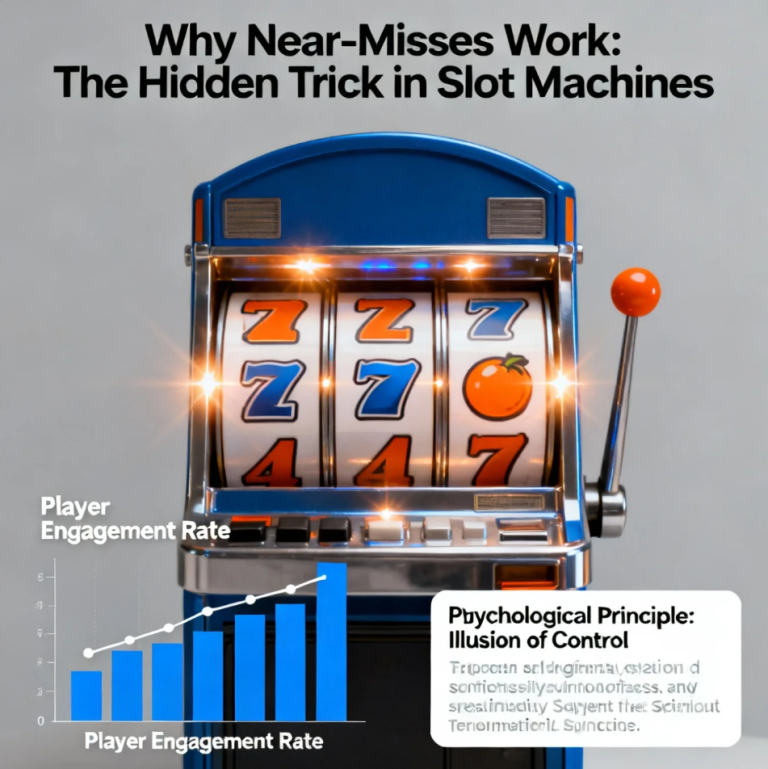
- Near-misses feel emotionally close
- Bonus features arrive intermittently
This unpredictability keeps the brain engaged without overwhelming it. Importantly, good slot UX design avoids frustration by balancing losses with frequent micro-rewards (small wins, animations, progress meters).
🔗 Outbound link: https://www.psychologytoday.com/us/basics/reward-system
📱 5. Ergonomics and Thumb-First Design
On mobile especially, a slot feels good when it’s physically easy to play.
UX best practices include:
- Large, reachable spin buttons
- One-hand usability
- Minimal accidental taps
Poor ergonomics break immersion. Great slot UX design feels almost invisible—the player never thinks about how they’re playing, only about the experience itself.
🔁 6. Consistency Builds Trust
Consistency across:
- Symbols
- Animations
- Sound cues
- UI placement
…reduces learning effort and builds subconscious trust. When players understand a slot quickly, they relax—and relaxed users enjoy experiences more.
This is why top-performing slots rarely reinvent basic UI patterns.
🧩 Final Thoughts: UX Is the Real Game Engine
What makes a slot “feel good” isn’t luck—it’s intentional UX design.
By combining:
- Fast feedback
- Emotional sound design
- Purposeful animation
- Psychological reward timing
…slot designers create experiences that feel intuitive, satisfying, and engaging. In today’s competitive market, slot UX design isn’t just a bonus—it’s the foundation of player retention.
About the Author