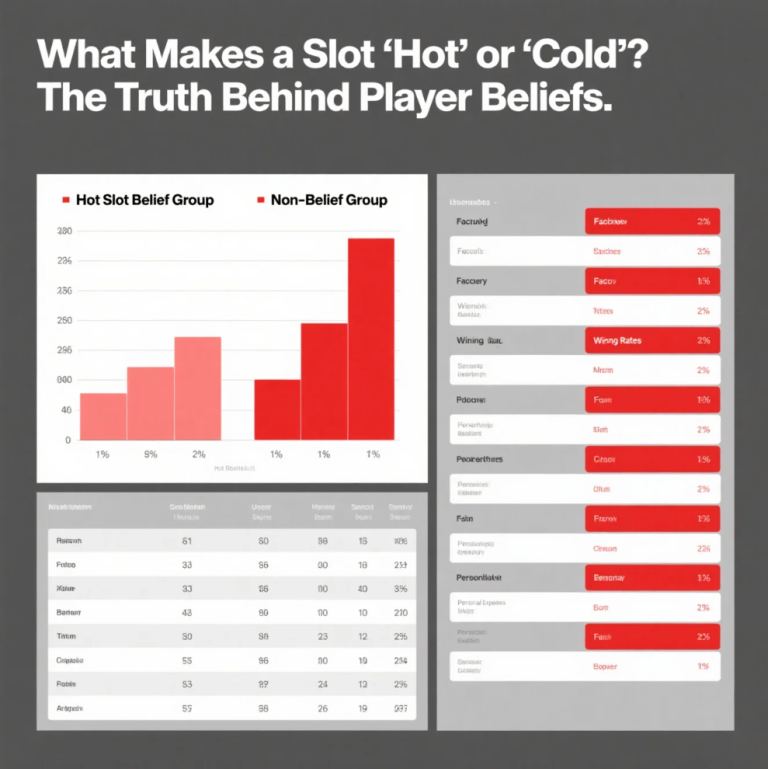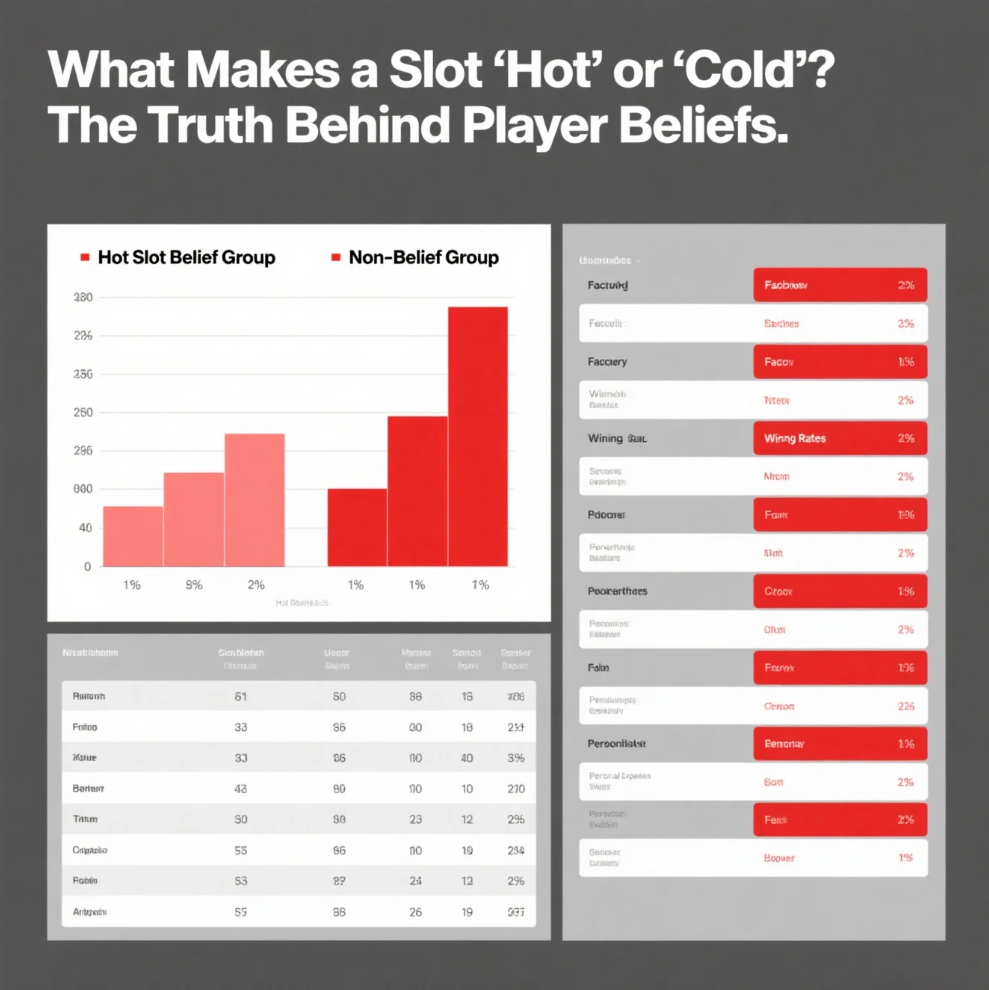
Walk into any casino—or scroll through an online one—and you’ll hear players debating whether a slot is “hot” (paying out frequently) or “cold” (due for a win).
These terms are deeply embedded in gambling culture, but what really makes a slot “hot” or “cold”? And is there any truth behind these long-held player beliefs?
Let’s break down the psychology, math, and myths behind what makes a slot hot or cold.
1. Understanding RNG: Why Outcomes Are Truly Random
Every modern slot—online or land-based—uses a Random Number Generator (RNG).
RNG ensures:
- Each spin is independent
- Past results don’t influence future results
- There is no “memory” in the game
- Streaks are purely coincidence
A slot isn’t aware that it hasn’t paid in a while, nor does it intentionally start “heating up.”
Learn more about RNG fairness:
https://www.gamblingcommission.gov.uk/
2. So Why Do Players Say a Slot is “Hot”?
A slot is considered hot when:
- It has recently given several wins
- Bonuses appear frequently
- Players experience short-term success
But here’s the truth:
A slot can appear hot due to variance—random clusters of wins that happen by chance.
In statistics, this is called “clumping”, where random events naturally group together, creating an illusion of patterns.
3. What Players Call “Cold Slots”
Players describe slots as cold when:
- They haven’t hit bonuses for a while
- The win frequency feels low
- High volatility results in long losing streaks
A cold slot is not “due”—it’s simply going through normal variance.
Volatility plays the biggest role here.
4. Volatility: The Real Reason Behind Hot & Cold Feelings
Volatility (or variance) determines a slot’s payout behavior.
High-volatility slots:
- Big payouts
- Long dry spells
- More emotional ups and downs
- Often mistaken for being “cold”
Low-volatility slots:
- Frequent small wins
- Fewer big jackpots
- Often perceived as “hotter”
Volatility influences how streaky a game feels, fueling myths about hot/cold machines.
5. RTP Doesn’t Work the Way Many Players Think
RTP (Return to Player) is a long-term average, not a prediction for your session.
A 96% RTP does NOT mean:
- You’ll get 96% of your money back each session
- The slot gets better or worse over time
- The machine “adjusts” based on wins or losses
RTP is calculated over millions of spins—not the few hundred spins a player makes.
6. Game States & Bonus Cycles: Truth vs Misconception
Many players believe slots have cycles where bonuses appear at predictable intervals.
The truth:
- Slots do not cycle wins
- Bonus timing is RNG-driven
- Any spin can trigger (or miss) a bonus
Game designers balance overall probability—not streak patterns—when creating bonus mechanics.
7. Confirmation Bias: The Psychology Behind Player Beliefs
Player beliefs about hot and cold slots often come from cognitive biases.
The most common include:
• Gambler’s Fallacy
The belief that outcomes “balance out” in the short term.
• Confirmation Bias
Remembering moments that fit the narrative (e.g., “I always win on this slot!”).
• Pattern Recognition
The human brain is wired to find patterns—even in randomness.
These biases reinforce the perception of streaks that aren’t mathematically meaningful.
8. Casino Marketing Sometimes Reinforces the Myth
Some casinos show:
- “Hot slot lists”
- “Machines paying out now”
- “Games with big recent wins”
These are engagement tools, not indicators of future outcomes.
They highlight past events to attract players—but past events do not predict the next spin.
9. How to Approach Slots Intelligently in 2025
If hot/cold labels aren’t reliable, what should players look at instead?
Smart slot selection involves:
- Volatility level (matched to your bankroll)
- RTP percentage
- Bonus frequency & mechanics
- Game reviews and features
- Responsible bankroll management
Understanding the math offers far more value than chasing streaks.
Conclusion
So, what makes a slot hot or cold?
In reality—nothing.
Slots don’t heat up or cool down; they simply produce random outcomes influenced by volatility and math.
The belief in hot/cold slots comes from psychology, streak perception, and player storytelling—not actual game mechanics.
Understanding the truth empowers players to enjoy slots with clarity, confidence, and realistic expectations.
About the Author