Have you ever spun a slot machine and landed just one symbol away from a jackpot—only to feel more motivated to keep playing? That reaction isn’t accidental. It’s the result of a well-studied psychological phenomenon known as the near-miss effect.
Understanding why near-misses work reveals how slot machines are designed not just around chance, but around human psychology.
What Is a Near-Miss in Slot Machines?
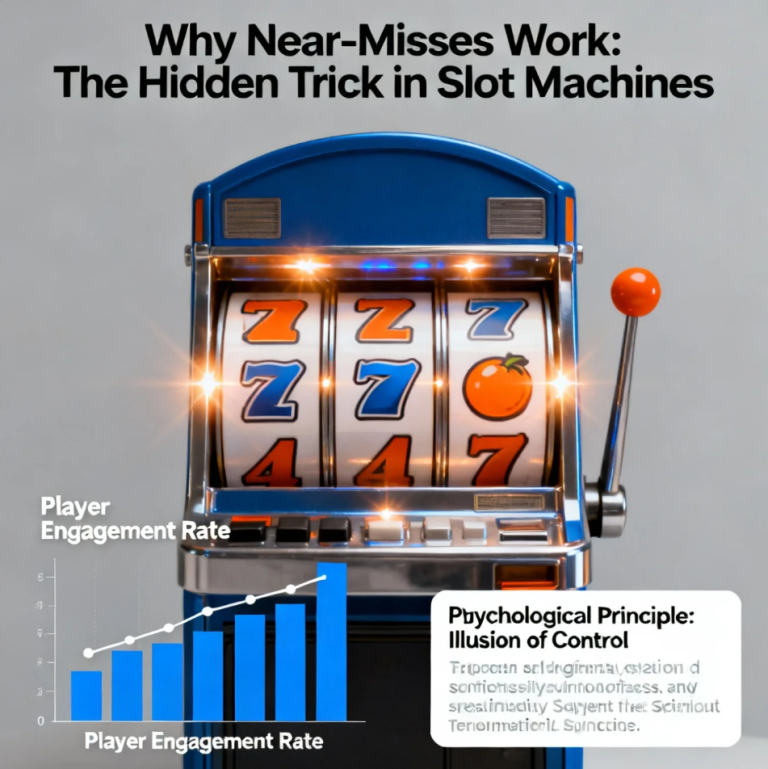
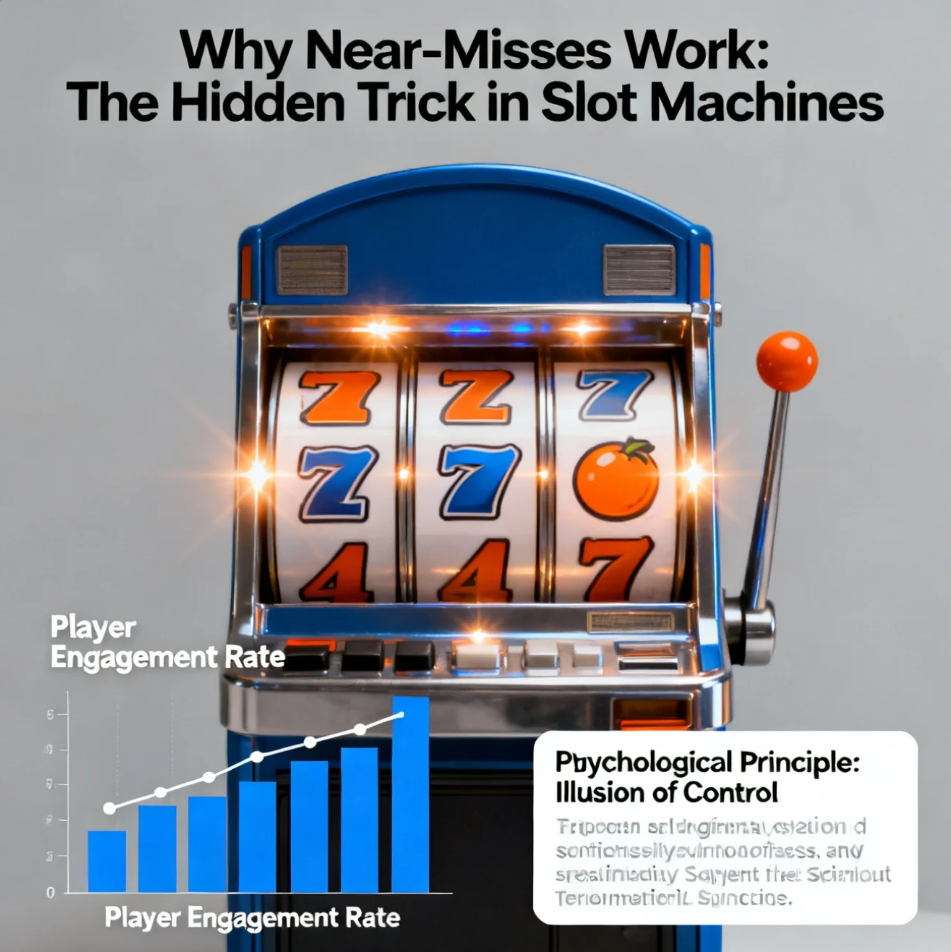
A near-miss occurs when the outcome looks close to a win but is still a loss—such as:
- Two jackpot symbols lining up, with the third just above or below
- Bonus symbols appearing almost complete
- Progress bars stopping just short of a reward
Even though the result is a loss, the brain often interprets it differently than a regular miss.
The Psychology Behind the Near-Miss Effect
🧠 1. The Brain Treats Near-Misses Like Partial Wins
Studies show that near-misses activate reward-related areas of the brain—similar to actual wins. This creates a feeling of:
- “I was close”
- “I’m getting better”
- “The next one could hit”
Even though skill is not involved, the brain reacts as if progress is being made.
🔄 2. Near-Misses Increase Motivation, Not Satisfaction
Unlike wins (which satisfy) or clear losses (which discourage), near-misses:
- Increase arousal
- Create tension
- Encourage continued play
This makes them especially effective at keeping players engaged.
🎯 3. Illusion of Control
Near-misses can subtly create the illusion that outcomes are influenced by timing, strategy, or choice—even in games that are entirely random.
This illusion makes players feel more involved and invested.
Why Slot Machines Use Near-Misses So Often
From a game-design perspective, near-misses are powerful because they:
- Extend play sessions
- Increase emotional engagement
- Reduce the feeling of outright loss
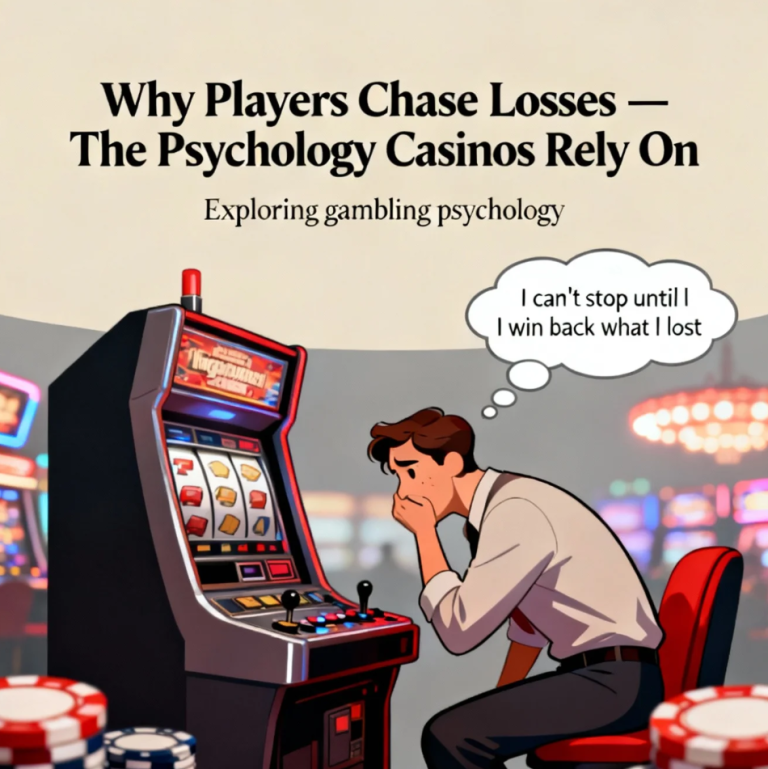
- Encourage “one more try” behavior
Importantly, near-misses do not increase actual odds of winning—they only affect perception.
Near-Misses vs Actual Probability
A critical point many players misunderstand:
A near-miss is not a sign that a win is coming soon.
Each spin in a slot machine is independent. The probability of winning does not change based on previous outcomes, no matter how close they appear.
Why Understanding Near-Misses Matters
Recognizing the near-miss effect in slot machines helps players:
- Make more informed decisions
- Avoid emotional decision-making
- Understand how game design influences behavior
- Separate perceived progress from actual probability
Awareness reduces the power of the effect.
Ethical Discussions Around Near-Miss Design
Near-misses are legal in many jurisdictions, but they are often discussed in debates about:
- Responsible gaming
- Player psychology
- Transparency in game design
Understanding these mechanics is essential for informed participation and regulation.
Conclusion
Near-misses work because they exploit how the human brain processes reward, motivation, and anticipation. While they feel meaningful, they are mathematically no different from any other loss.
By understanding the hidden psychology behind near-misses, players gain clarity, control, and awareness—turning confusion into informed choice rather than emotional reaction.
About the Author