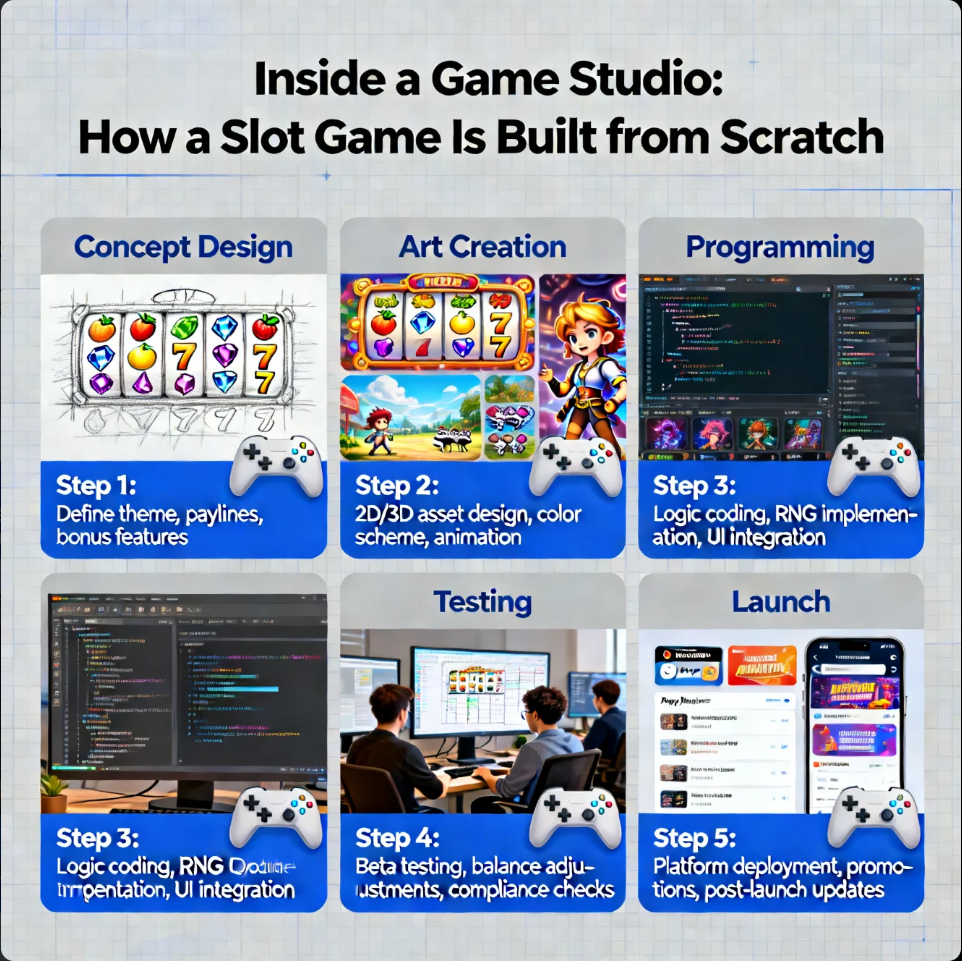
Slot games may look effortless on the surface, but behind every spin lies months of planning, design, math, and testing. Modern slot development blends art, psychology, technology, and regulatory compliance into a tightly coordinated production process.
Here’s an inside look at how a slot game is built—from a blank page to a casino-ready experience.
Step 1: Concept & Creative Direction
Every slot game starts with an idea. The creative team defines:
- Theme (mythology, pop culture, adventure, fantasy, luxury)
- Target audience (casual players, high-volatility fans, mobile-first users)
- Visual tone (cartoon, cinematic, minimal, retro)
This phase also establishes unique selling points—special mechanics, bonus styles, or narrative elements that differentiate the game in a crowded market.
Step 2: Game Mathematics & RTP Design
Behind the visuals is a carefully engineered math model. Game mathematicians determine:
- Return to Player (RTP) percentage
- Volatility (low, medium, or high risk)
- Hit frequency
- Paytable structure
This math framework ensures the game feels exciting while remaining profitable and compliant with regulations.
The math dictates how the game feels, not just how it pays.
Step 3: Reel Mechanics & Feature Planning
Designers define the gameplay mechanics, including:
- Number of reels and paylines or clusters
- Wilds, scatters, multipliers, and expanding symbols
- Free spins, bonus rounds, or cascading reels
- Progressive or fixed jackpots
Every feature is balanced to maintain player engagement without overwhelming complexity.
Step 4: Visual Design & Animation
Artists bring the game to life through:
- Character design and symbol creation
- Background art and UI elements
- Animations for wins, bonuses, and transitions
High-performing slots use visual rewards—explosions, glow effects, character reactions—to reinforce excitement and satisfaction.
Step 5: Sound Design & Music
Sound is one of the most powerful emotional triggers in slot games. Audio teams create:
- Adaptive background music
- Win sounds and anticipation cues
- Bonus-round audio variations
These sounds are engineered to enhance perceived wins, reinforce momentum, and encourage continued play.
Step 6: Development & Coding
Developers translate the creative vision into a working game using:
- Game engines (often HTML5-based for cross-platform play)
- Random Number Generators (RNGs)
- Backend systems for analytics and compliance
The goal is seamless performance across desktop, tablet, and mobile devices.
Step 7: Testing, Compliance & QA
Before launch, the game undergoes rigorous testing:
- Functional testing (bugs, crashes, logic errors)
- Math verification and RTP validation
- Performance testing across devices
- Regulatory certification for different markets
This phase ensures fairness, stability, and legal compliance.
Step 8: Launch, Analytics & Optimization
Once live, the game continues to evolve. Studios monitor:
- Player behavior and session length
- Feature engagement rates
- Drop-off points and monetization patterns
Updates may refine animations, tweak features, or optimize performance based on real-world data.
Why Slot Development Is Both Art and Science
Successful slot games balance:
- Creative storytelling
- Psychological engagement
- Mathematical precision
- Technical reliability
This fusion explains why standout slots feel immersive, intuitive, and rewarding—while quietly operating within strict mathematical boundaries.
Final Thoughts
Building a slot game from scratch is a multidisciplinary effort involving artists, mathematicians, developers, sound designers, and compliance experts. Every spin represents thousands of design decisions working in harmony.
The next time you press “spin,” remember—you’re not just playing a game. You’re interacting with a carefully crafted digital experience designed to entertain, engage, and endure.
About the Author