When you sign up for an online casino, flashy games and generous bonuses are easy to see. What’s less visible—but far more important—is what happens behind the curtain. Online casino licenses determine whether a platform is trustworthy, fair, and legally allowed to operate.
Understanding how these licenses work helps players make safer, smarter choices in the world of iGaming.
What Is an Online Casino License?
An online casino license is an official authorization issued by a gambling regulator. It allows a casino operator to legally offer games under strict rules designed to protect players and ensure fairness.
A valid license typically covers:
- Game fairness and RNG testing
- Financial transparency
- Player fund protection
- Responsible gambling measures
Without a license, a casino operates in a legal gray area—or illegally.
Who Issues Online Casino Licenses?
Licenses are granted by recognized gambling authorities, often tied to specific jurisdictions.
Some of the most well-known regulators include:
- Malta Gaming Authority (MGA)
- UK Gambling Commission (UKGC)
- Gibraltar Regulatory Authority
- Curaçao Gaming Control Board
Each authority has different standards, fees, and levels of oversight.
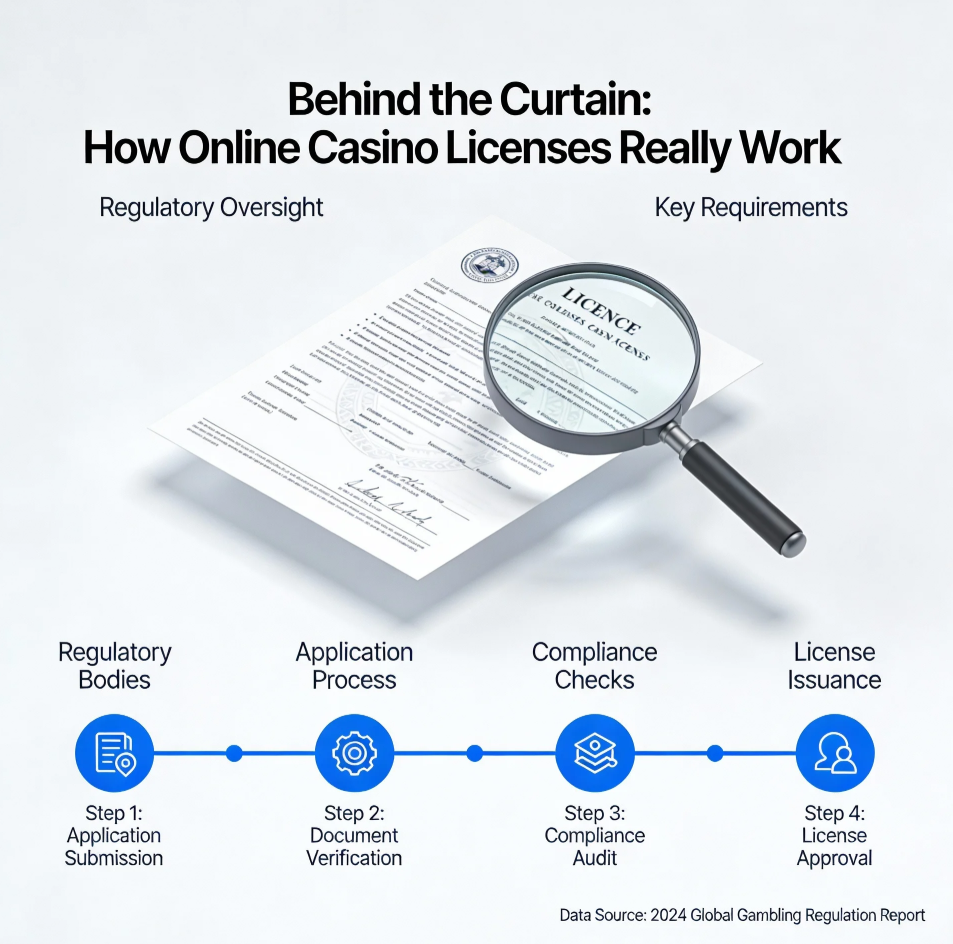
How the Licensing Process Works
Obtaining an online casino license is neither quick nor cheap.
The process usually involves:
- Background checks on owners and key staff
- Financial audits and proof of capital
- Testing of games and software providers
- Review of security systems and data protection
- Ongoing compliance and regular reporting
Only operators that meet strict requirements are approved.
Why Some Licenses Are Considered Stronger
Not all licenses are equal. Regulators differ in how aggressively they enforce rules.
Stricter licenses (like UKGC and MGA) typically require:
- Separate player and operational funds
- Independent dispute resolution
- Transparent bonus terms
- Strong consumer protection laws
Looser jurisdictions may be faster and cheaper but offer fewer safeguards for players.
What a License Means for Players
For players, a valid online casino license provides reassurance.
It ensures:
- Games are not rigged
- Withdrawals follow clear rules
- Complaints can be escalated to regulators
- Casinos can be penalized or shut down for violations
A license acts as a safety net, not a guarantee—but it’s a critical one.
Licensing and Global Reach
Online casinos often operate internationally using licenses that allow cross-border services. This is why players may access casinos licensed in jurisdictions far from where they live.
However:
- Local laws still apply
- Some licenses restrict certain countries
- Reputable casinos block regions they are not authorized to serve
Understanding this helps players avoid legal and payment issues.
Why Licensed Casinos Matter More Than Ever
As online gambling grows, so do risks such as fraud, data misuse, and unfair practices. Licensing is the industry’s main mechanism for accountability.
Licensed casinos must:
- Adapt to evolving regulations
- Invest in security and compliance
- Prioritize player trust over short-term profit
This raises standards across the entire iGaming ecosystem.
Final Thoughts: Transparency Behind the Glamour
Online casino licenses may not be exciting, but they are essential. They represent the difference between entertainment and exploitation.
By choosing licensed platforms, players support:
- Fair play
- Ethical operations
- A safer online gambling environment
Behind every reputable casino is a regulator ensuring the games stay fun—and fair.
About the Author